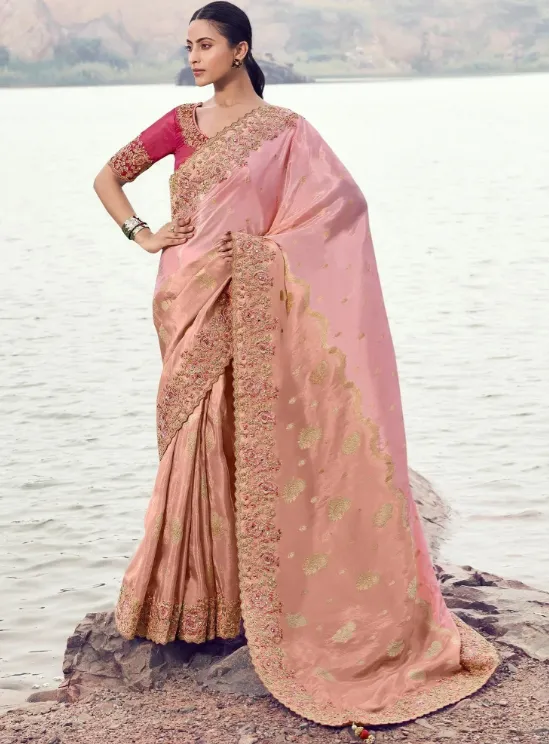
A wedding saree can look plain from the front until the pallu opens across the shoulder and reveals an elaborate woven pattern. While selecting a silk saree, take time to see that section spread out before judging the garment. The pallu may carry the design you remember long after the event, but its weight and border also affect how easily you wear it. Think about ceremony photographs, the blouse you will pair with it and whether the decorative end needs a little extra support.
Find the Pattern Worth Showing
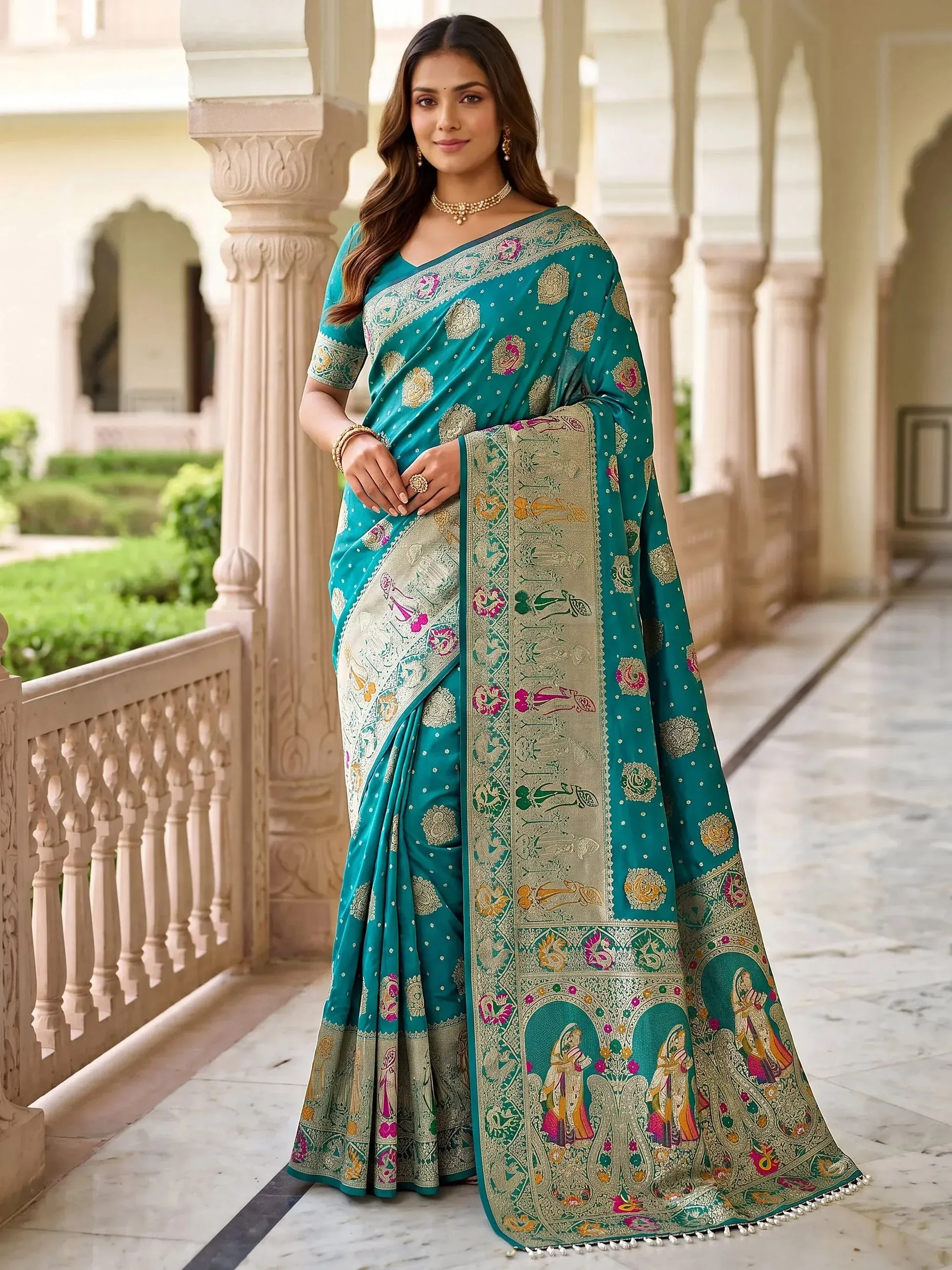
Open the full drape photograph and locate the largest motif. It may sit near the end of the pallu rather than in the main body. Woven zari flowers, geometric borders and small repeated butti motifs create different impressions when folded together. One silk selection includes navy designs with zari weaving and maroon pieces with embroidery, so the word silk does not tell you which pattern you will receive. Focus on the design in the actual listing instead of relying on a general category description.
Separate Weaving From Added Work
A woven motif is formed as part of the fabric, whereas sequins, thread embroidery and beadwork may be added to its surface. Both approaches can appear on occasion wear, sometimes together. Look at a close photograph taken sideways to tell raised decoration from the underlying weave. If you hope to buy pure silk or handloom cloth, request material and production information; those qualities cannot be inferred from a collection name alone. Knowing what creates the pattern also helps you ask more useful care questions.
Compare the Ceremony and Reception
A wedding saree may be worn for a morning ritual and then again during an evening reception. Think about how much of the pallu will appear when you sit beside family members and when you stand for formal portraits. A broad decorated end can be spread for a photograph, then folded into narrower pleats for dinner. Practise both arrangements with the blouse on. If the fabric pulls against your shoulder in the narrower version, loosen the fold before adding another fastening.
Bring the Blouse Into Focus
A heavily patterned pallu can make a plain blouse look intentional. Conversely, a blouse with embroidery around the neck may compete with the woven end when they meet at the shoulder. Check whether the selected saree includes unstitched blouse fabric, then ask your tailor to show the intended neckline against the pallu. Try the combination in daylight and under a warm lamp. You do not need perfectly matching threads; a clear relationship between the colours can be more pleasing than an exact copy.
Check Support Before Adding Pins
The fold at your shoulder carries the weight of whatever part of the pallu hangs behind you. If the border has dense embroidery, secure the pleats through a sturdy blouse seam and avoid piercing delicate motifs. Test the drape by turning your head, sitting and lifting one arm. The goal is a secure fold that allows ordinary movement, not a rigid arrangement held together by many pins. Five quick checks before leaving can identify the detail that still needs attention.
-
Pallu weight at shoulder
-
Blouse neckline clearance
-
Border position in portraits
-
Smooth accessory fastenings
-
Garment-specific care notes
Keep the Decorative End Protected
When travelling to the venue, fold the pallu with the worked surface supported rather than compressed beneath shoes or handbags. Keep jewellery clasps away from fragile threads, and follow the specific garment care instructions after the event. If the decorative end becomes creased, do not put direct heat over sequins or raised work without appropriate guidance. A professional cleaner familiar with embellished clothing may be preferable for stains. The beautiful part of the saree should remain intact for another family occasion.
Conclusion
Perhaps the detail that wins you over is a little gold flower near the end of the pallu or a border that changes pattern halfway down. Point it out to the person helping you dress, and save one clear photograph. The rest of the day can move at its own pace. When the fabric is comfortable, the blouse works with the border, and the decorative end stays secure, the saree becomes part of your wedding memories rather than something you have to manage.